


Infinity
As a new initiative to create a place for expression on a larger scale, not bound by the framework of conventional art fairs, the exhibition project “Infinity” will be held, specializing in large-scale installation works. It will offer huge three-dimensional works and immersive spatial presentations. You can experience “art that you can feel with your body” that goes beyond the framework of conventional art fairs.
Artists
Jong YuGyong
Hisashi Yamamoto
Fumiaki Akahane
Kojiro Nose
Kojiro Nose
Artwork Statement
A rock garden, composed primarily of stones, has evolved as a space of simplicity and spirituality deeply rooted in Zen philosophy. I am exploring what kind of space might emerge if these stones were substituted with concrete blocks.
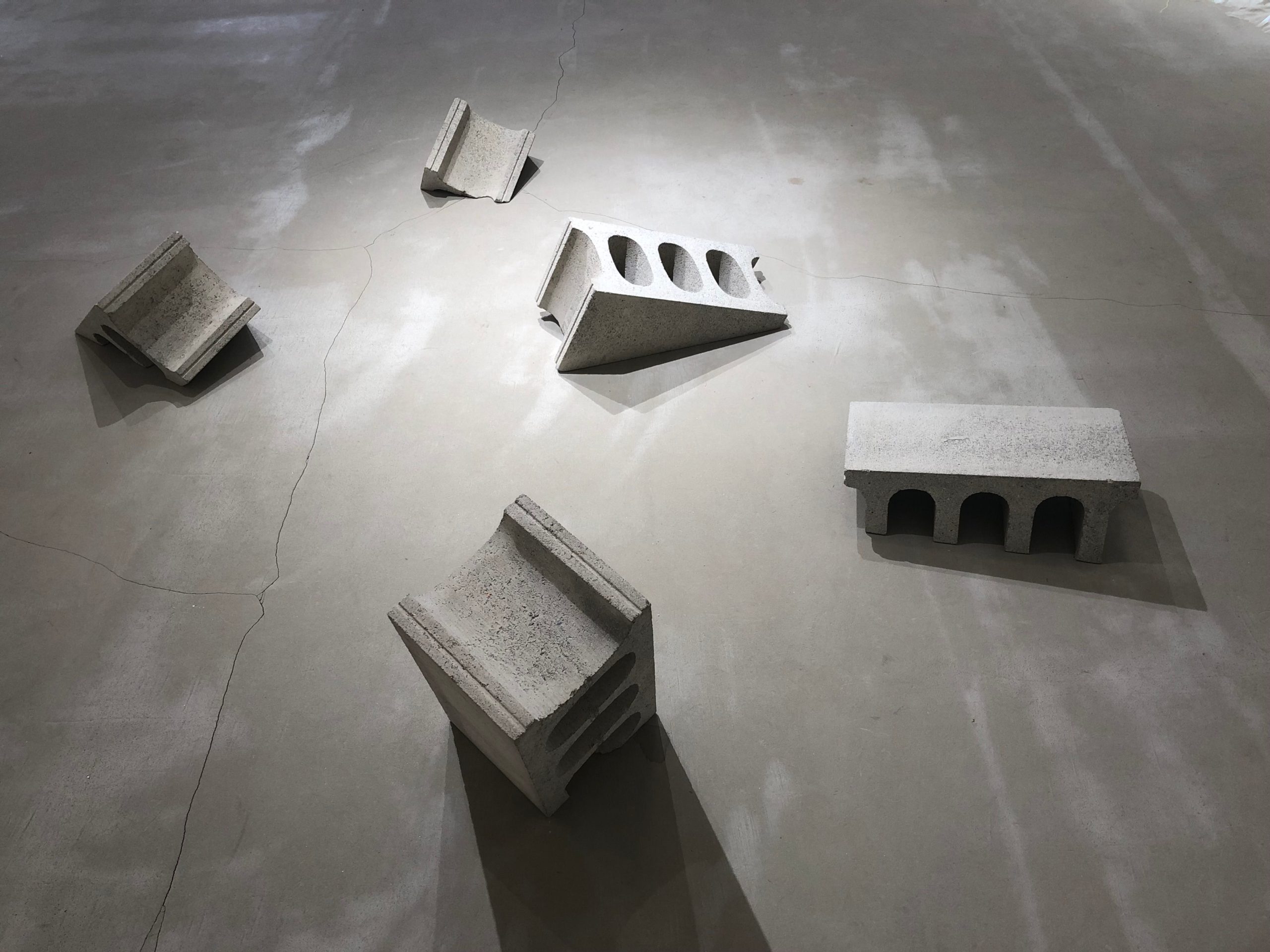
Kojiro Nose
Concrete Blocks Garden
2025
concrete block
Installation
H300 × W300 cm
Artist Profile
Born in Okinawa in 1950. While studying in MA in sculpture at Tama Art University Graduate School, he spent over ten years producing mainly stone carvings in Tokyo. After returning to Okinawa, he became aware anew of the presence of concrete blocks within the landscape and began using them as materials in his work. He has engaged in numerous collaborations with architecture, incorporating materials such as H-beams and scaffolding pipes. In 1994, he produced reliefs for the Nanjo City Cultural Centre Sugar Hall, and in 2007, installed outdoor sculptures at the Okinawa Prefectural Museum and Art Museum. In 2021, he held solo exhibitions at three venues and published a catalogue of works titled BLOCKHEAD. From 2023 to 2024, he realized commissioned art works with concrete product manufacturers in Osaka and Gunma.
Infinity
Detail- SECTION :
- AFAF Special Booth
Fumiaki Akahane
Artwork Statement
Once, the world existed as a vast, unseen realm filled with darkness, where human beings feared nature…including themselves… but sometimes revered it.
For me, painting is a portal into this primordial world, and the creation is the act of accessing it.
Through my work, I seek to visualize the naked world trapped within our current social structures and to liberate alternative ways of perceiving.
I believe the world should be larger, freer, more compassionate, imaginative, and beautiful.
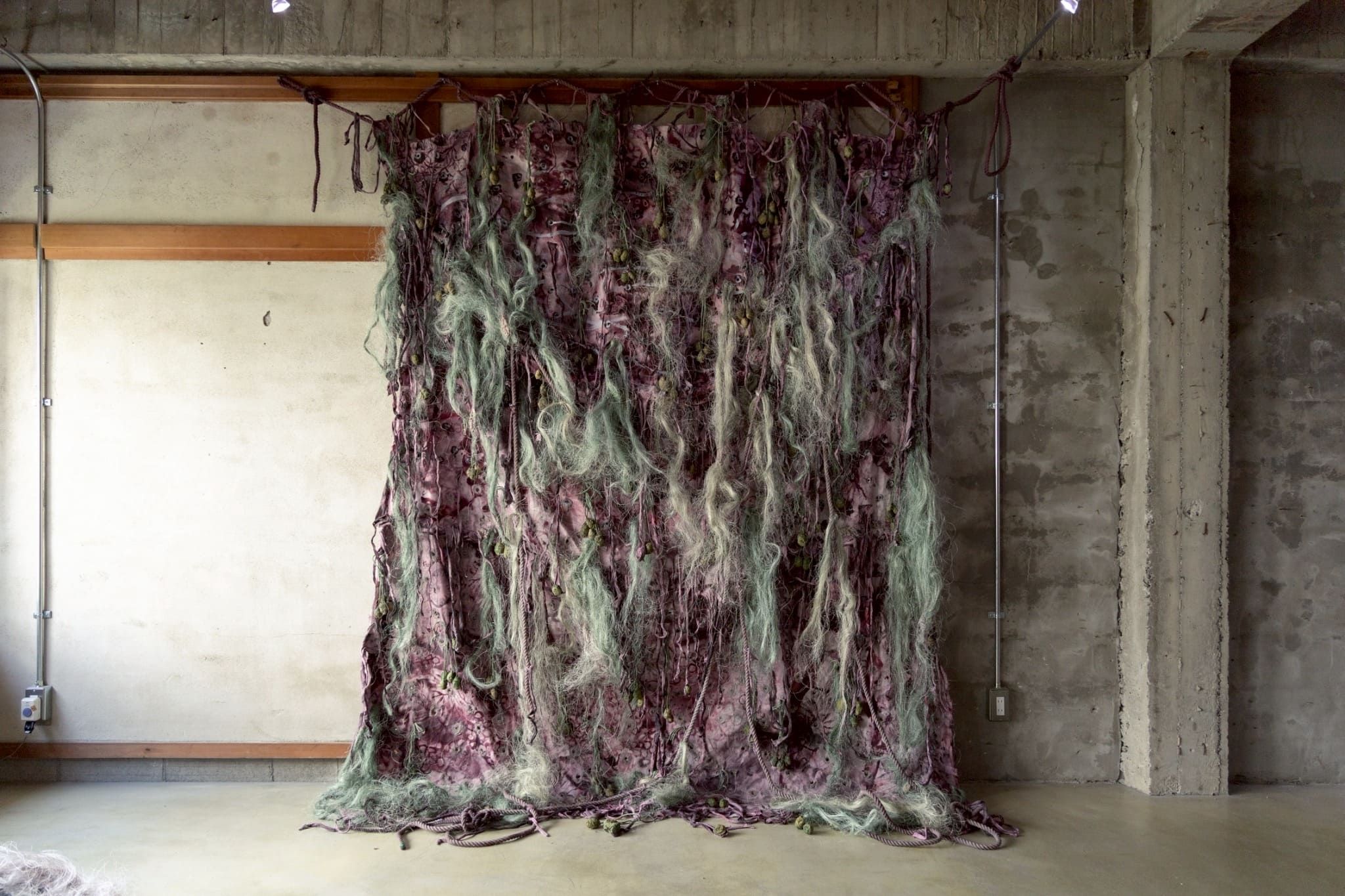
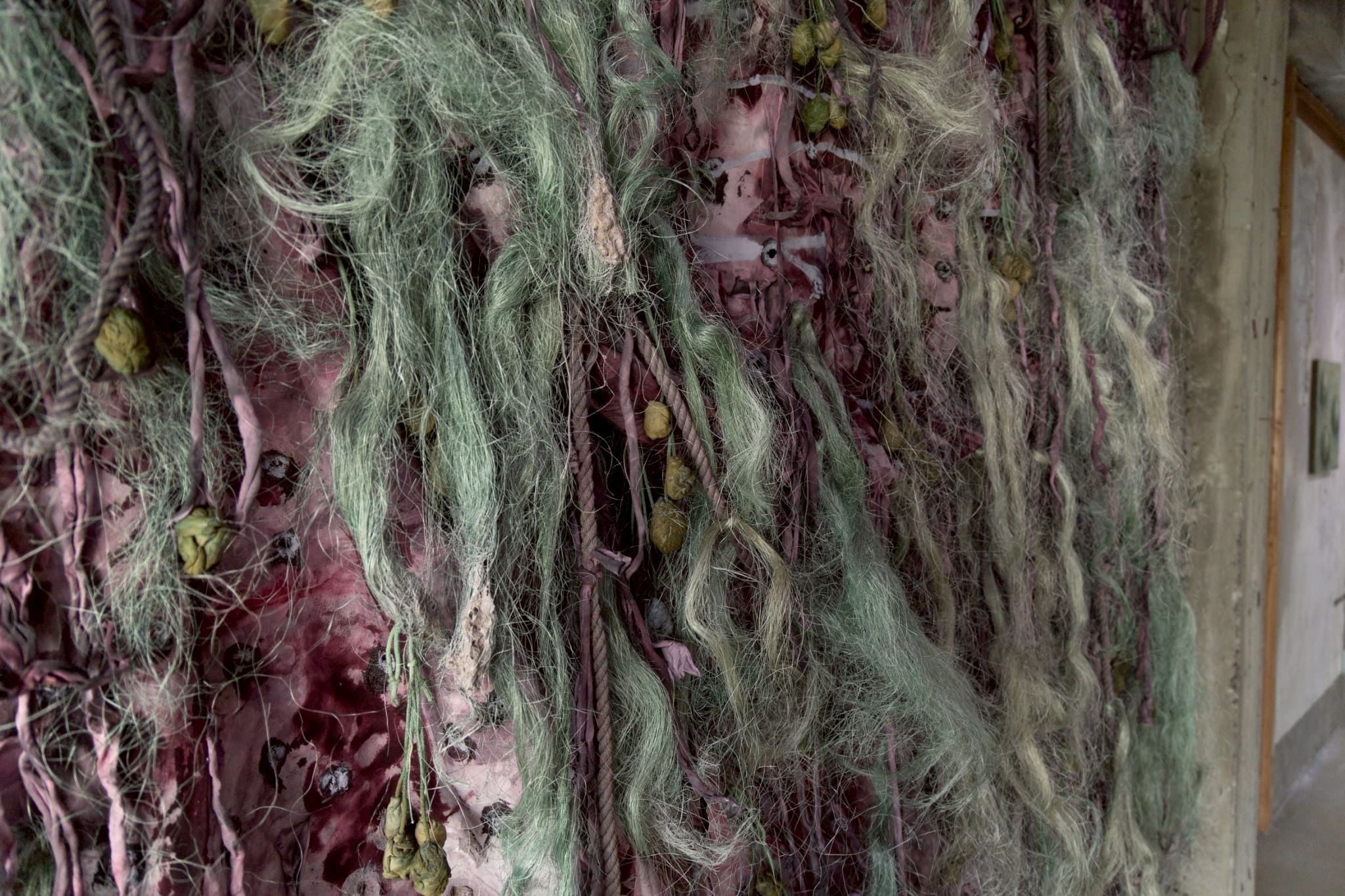
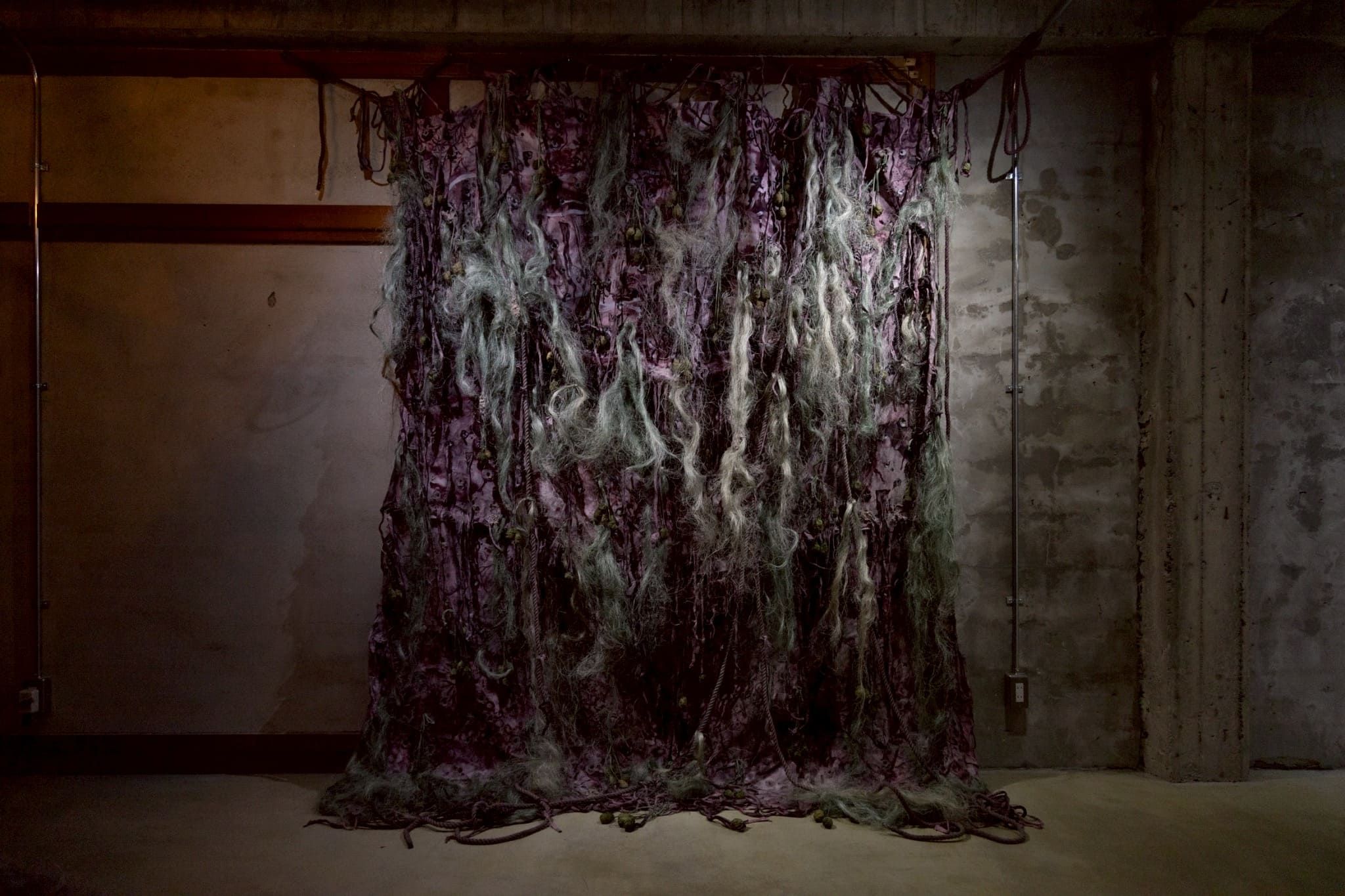

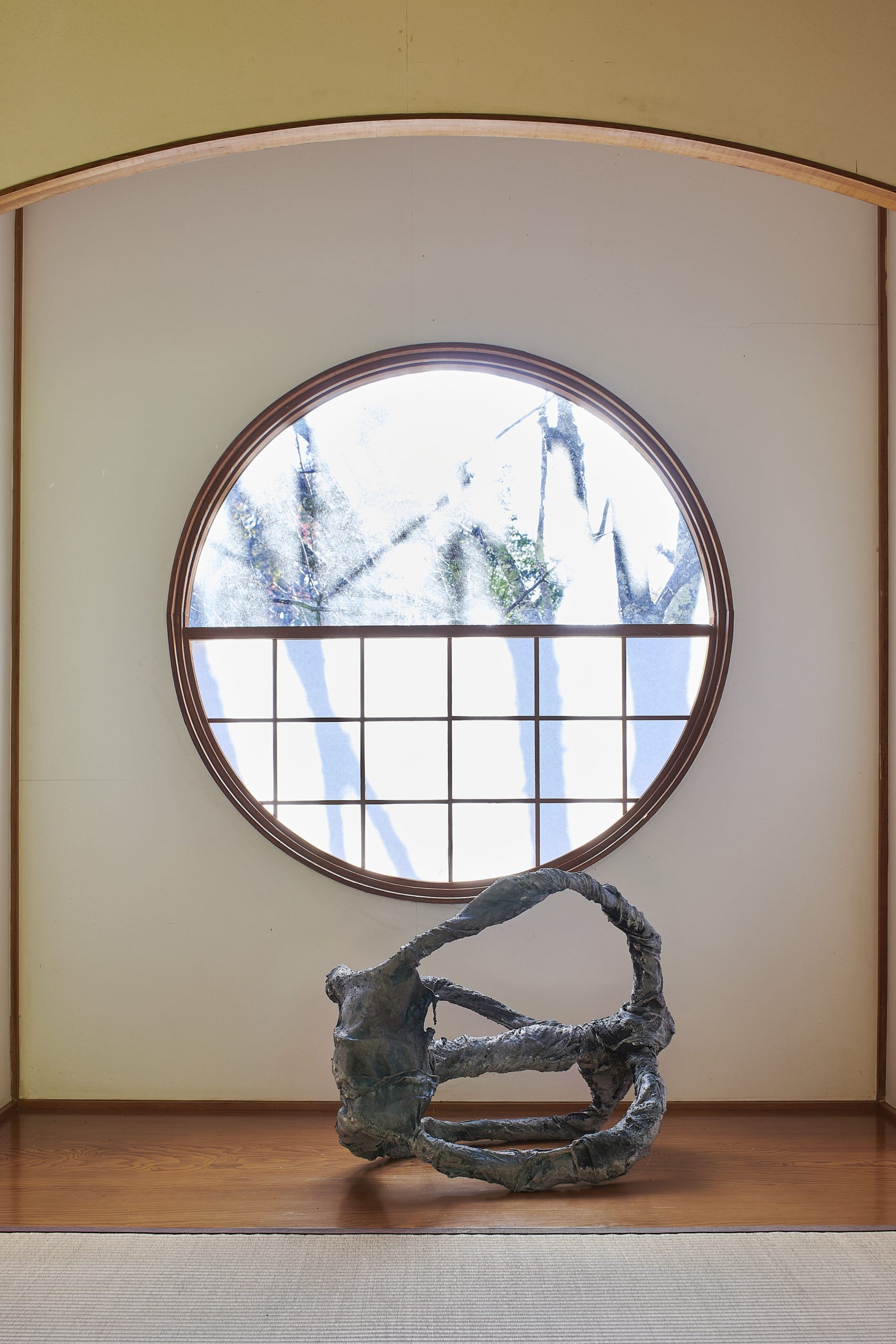
Fumiaki Akahane
green hair/hole/skin
2025
Cotton cloth, acrylic, bond, cotton, rope, sisal, hemp fiber, cofee beans , sand
Installation
H280 × W240 × D25 cm
Artist Profile
Fumiaki Akahae
Born in Nagano, Japan, 1984. Lives and works in Nagano. Graduated the Department of Oil Painting, College of Art and Design, Musashino Art University in 2008.Recent solo exhibitions include “”Life and Circulation”” at Informel Nakagawa Village Art Museum (2024), “”Soil Psychedelia! at CAVE-AYUMI
GALLERY (2023), and “”Soils and Survivors”” at Suwa City Museum of Art
(2023). Group exhibition “”VOCA 2023: The Vision of Contemporary Art “”
at The Ueno Royal Museum, Tokyo.
In 2025, he was awarded the IZUMI KATO PRIZE and is scheduled to participate in the artist residency program at CASA WABI, Mexico, in November.
■Education
Graduated from Painting Department, College of Art and Design, Musashino Art University in 2008.
■Solo exhibitions
2025 “Anarchic Skin” Smells good gallery(Ehime)
2024 “Life and Circulation” Informel Museum(Nagano)
2023 “Soil Psychedelia” CAVE-AYUMI GALLERY (Tokyo)
2023 “Soils and Survivors” Suwa City Museum(Nagano)
2022 “Rotten Symphony” CAVE-AYUMI GALLERY(Tokyo)
2020 “Against gravity” Token Art Center(Tokyo)
2019 “Compost Paintings” Art Laboratory Hashimoto(Kanagawa)
2017 “OILY YOUTH” Musashino Art University, gFAL(Tokyo)
2015 “OK PAINTING” One’s Room gallery & studio(Okinawa)
2014 “MY WAR” island MEDIUM(Tokyo)
2009 “Shining Darkness” magical, ARTROOM(Tokyo)
2007 “Fumiaki AKAHANE” MAGIC ROOM? (Tokyo)
■Group exhibitions
2025 “Even Drift” Leesaya( Tokyo)
2023 “SHINBISM” Maruyama Banka Memorial Musum(Nagano)
2023 “VOCA Exhibition 2023” Ueno Royal Museum(Tokyo)
2023 “ART SANPO 2023” Shops in Imabari city (Ehime) Organized by :Imabari Landscapes
2023 “VOCA Exhibition 2023” Ueno Royal Museum(Tokyo)
2023 “Koukougutan” TALION GALLERY(Tokyo)
2021 “PAINTINGS” CAVE-AYUMIGALLERY(Tokyo)
2020 “Muddy River” icou,Next to Hojo Komuten (Tokyo)/curated by Token Art Center
2020 “The National Museum of Art, Okutama (MOAO)―Supporting each other.OKUTAMA
coin―” gallery αM(Tokyo)
CAVE-AYUMI GALLERY
3 / 3
2019 “Token Art Center Pre-open exhibition” Token Art Center(Tokyo)
2017 “Spring Fever” Komagome SOKO(Tokyo)
2016 “Ghost’s hippocampus” Citizen gallery Yada(Nagoya)
2016 “TAKATO KONJAKU STORY” Shinshu takato art museum(Nagano)
2015 “Fumiaki Akahane・Keisuke Koizumi” TS4312(Tokyo)
2015 “The more it changes,the more it stays the same” modelroom(Tokyo)
2013 “Art program Ome 2013” Ome Municipal Museum of Art (Tokyo)
2013 “kuheV”JIKKA(Tokyo)
2012 “HOME ALONE” island MEDIUM(Tokyo)
2012 “Forever Young” Bambinart Gallery(Tokyo)
2012 “F.E.S.” 3331 Arts Chiyoda(Tokyo)
2012 “Power of a Painting” NADiff a/p/a/r/t (Tokyo,) and Hirori Art Center (Miyagi)
2011 “NAND GARDENING” TORARY NAND (Osaka)
2010 “Power of a Painting” island(Chiba)
2010 “HYOUGENSYA KEKKI SYUKAI 2” Edel Platzse Building(Osaka)
2009 “New Art 2010 — Pleasure of hands and eyes” Yokohama Civic Gallery(Yokohama)
2008 “magical museum tour” Tokyo Wonder Site(Tokyo)
2007 “WORM HOLE episode 9” magical, ART ROOM(Tokyo)
■Art fairs
2022「3331 ART FAIR 2022」3331 Arts Chiyoda(Tokyo)
2022 “Osaka Kansai international art festival art fair” Grand front Osaka(Osaka)
2021 “SWAB Barcelona art fair” Italian Pavilion(Barcelona, Spain)
2020 “ARTISTS’ FAIR KYOTO 2020” The Museum of Kyoto Annex(Kyoto)
2008 “”SCOPE NY 08,” booth of magical, ART ROOM(NY, USA)
■Artist is Residence
2025 Casa Wabi (Puerto Escondido, Mexico)
Infinity
Detail- SECTION :
- AFAF Special Booth
Jong YuGyong
Artwork Statement
Since 2022, through my work on Ōmura-yaki, I have been exploring how I can depict and express the “boundaries” and “complex situations” in which I find myself. For me, “Ōmura” is not merely a geographical location but also a conceptual site.
In December 1950, the Ōmura Immigration Detention Center (now the Ōmura Immigration Bureau) was established in Ōmura City, Nagasaki Prefecture, to deport Koreans and other individuals labeled as “illegal immigrants.” Among those detained were people affected by the aftermath of colonial rule as well as former prisoners. Those from former colonies who had once been regarded as “Japanese subjects” during the colonial period were reclassified as an “inner outsiders” with the enactment of the San Francisco Peace Treaty, and were forced into precarious and complex positions. Furthermore, the division of the Korean peninsula had repercussions inside the detention center, where conflicts and rifts reportedly arose depending on political allegiances.
This land is also said to be the place where tigers brought back from the Korean Peninsula during the Japanese invasions of Korea (1592–1598) were released, and it came to be called Hōkōbaru (“Field of Released Tigers”). Although no historical records remain, the legend of the released tigers—tied to the later establishment of a detention facility for Koreans on the same site—stimulates a powerful imagination.
Nearby, Arita in Saga Prefecture is known as one of Japan’s most important ceramic production centers. Its origins date back to the invasions of Korea, when potters brought from the peninsula laid its foundations. Among them, Yi Sam-pyeong is celebrated as the progenitor of Arita ware, and his cultural legacy endures to this day. Between Ōmura and Arita, the layered history of migration, settlement, and the transmission of skills and culture is deeply inscribed.
During my stay in Korea, I received a notice of compulsory military service from the Military Manpower Administration, which forced me to return to Japan. The Zainichi Korean community has always been demarcated by national borders, compelled to move, and treated as “out of place.” This condition is not confined to the past; it persists today and will continue to recur in the future.
The ceramics I have created for this project are based on ceramic hand grenades produced in Arita in 1944. These were developed as substitutes in response to a shortage of iron, but are said never to have been used in combat due to their lack of lethality. I regard this ceramic grenade as a symbolic motif connecting culture and war, and I link it to my own existence, which has always wavered along borders.
A “boundary” may appear fixed, yet in reality it is ambiguous and shifts depending on one’s standpoint or perspective. Such ambiguity and the experience of being treated as “out of place” may seem negative, but for me they have become opportunities to think, to learn, and to seek new perspectives. I believe art, too, does not provide clear-cut answers, but rather embraces ambiguity and open spaces, creating a site for thought in the mind of the viewer.
OMURA-yaki marginal is an attempt to reconsider the tremors and frictions that arise when living on a boundary. I hope this work will encourage viewers to re-examine the everyday and the familiar from a different perspective.
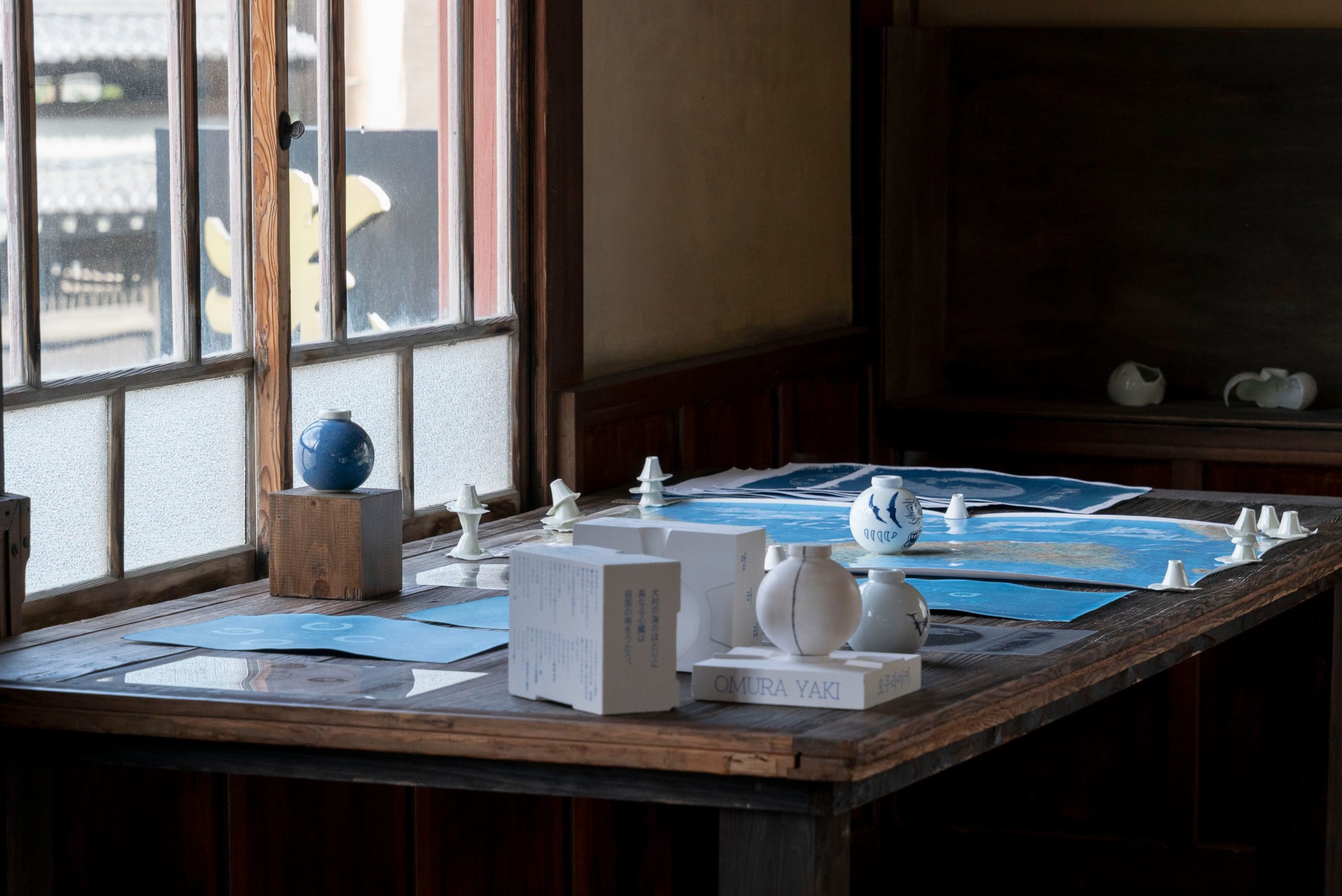

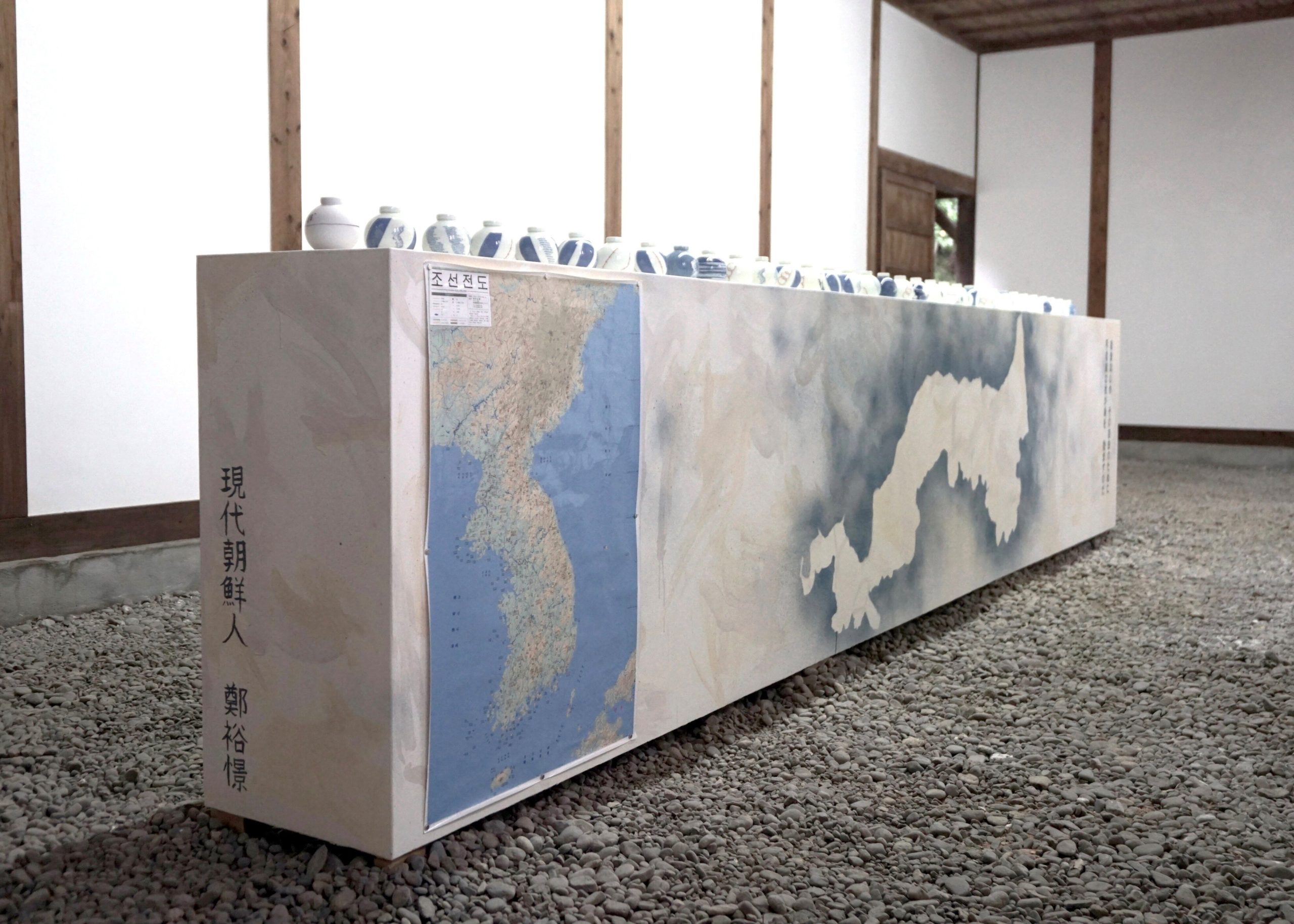
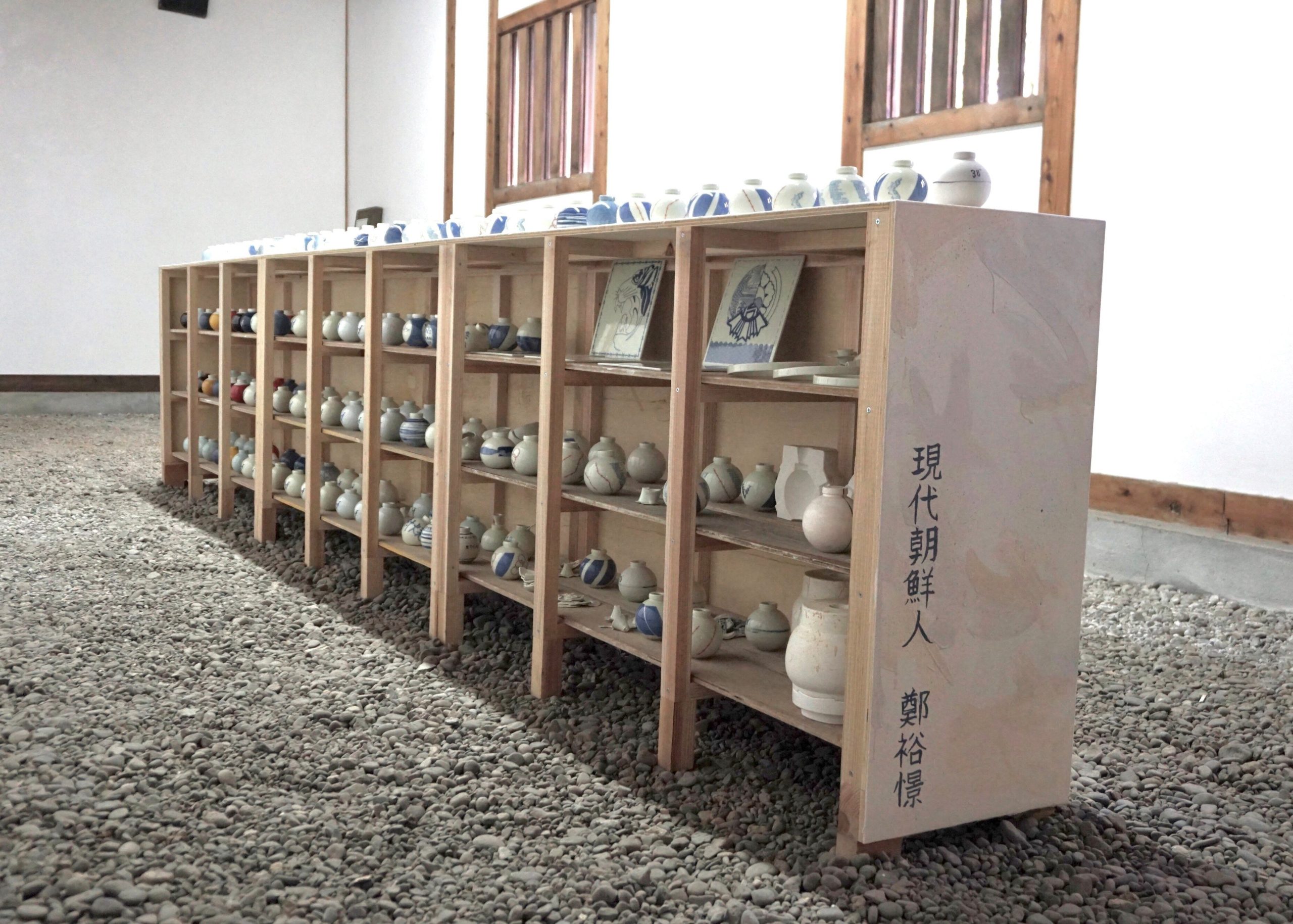
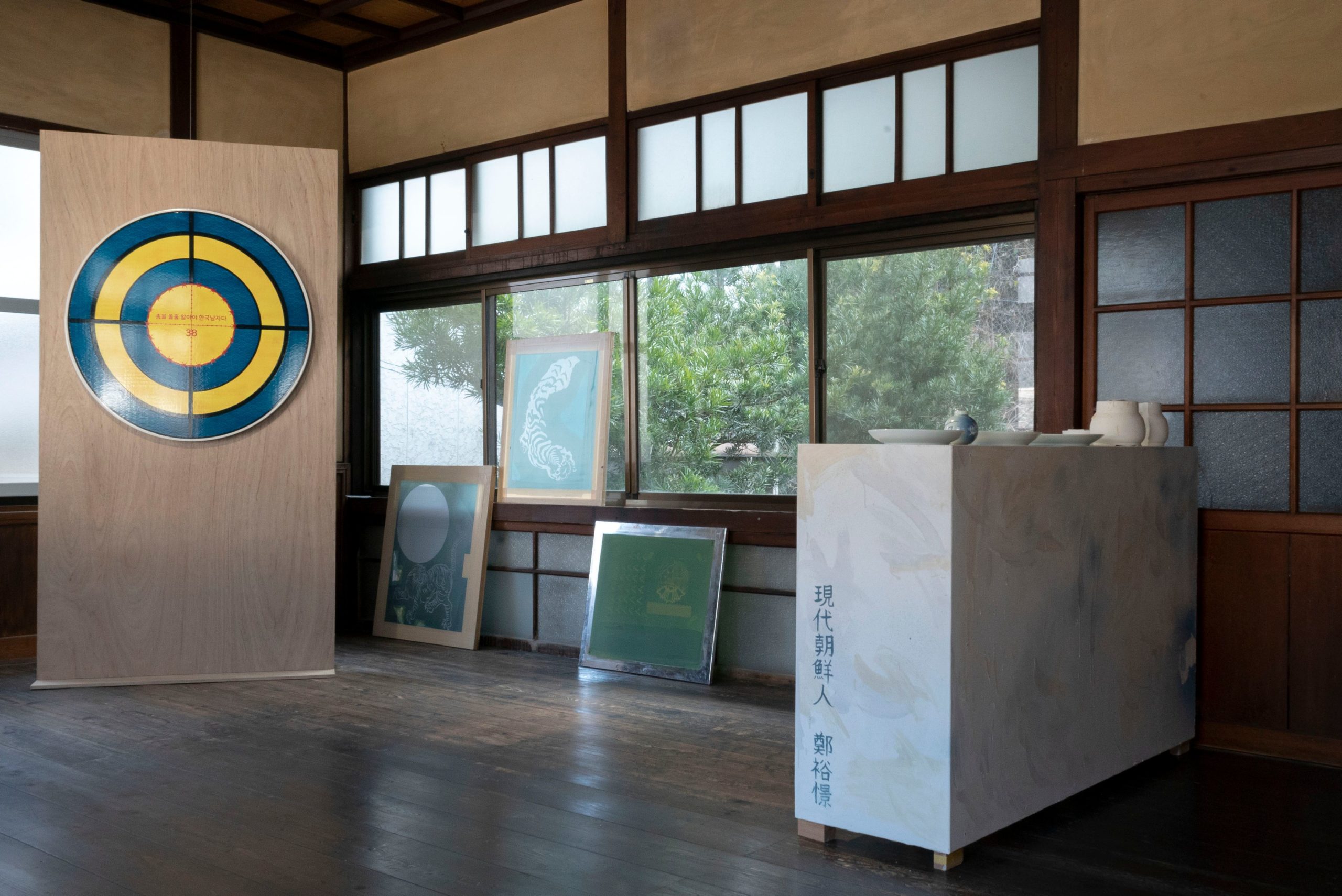
Jong YuGyong
OMURA yaki -marginal-
2025
acrylic on canvas, Porcelain, acrylic on wood panel, LED light bulb, LED tube light, wood board,plaster mold, wood
Installation
H500 × W500 cm
Artist Profile
Born in Hyōgo Prefecture in 1991, currently based in Fukuoka.
Graduated from the Department of Fine Arts, Korea University, in 2014.
From 2017, worked as an artist based in Seoul. Following the “”revision”” of South Korea’s Military Service Act, which made me subject to conscription, I returned to Japan at the end of 2020. My practice investigates the history of Korean “”migration”” and questions arbitrarily drawn “”borders”” as well as the relationship between war and culture. In recent years, I have been presenting works informed by research into the history of Arita ware and the Ōmura Detention Center.
Solo Exhibitions
2025 꽝! KKWANG!, EUREKA, Fukuoka
2024 Ōmura-yaki, Machi no Office Shunyōdō & AGITO, Saga
2021 After Potemkin Villages, Art Space Tetra, Fukuoka
2014 JUCHE POP, CHODEMI, Tokyo
Group Exhibitions
2023 Fukuoka Contemporary Artist File, Former Mori Tahei Residence Nagayamon Gate, Fukuoka
2023 Homemaking #2, Musashino Place, Tokyo
2023 The 1st Fukuoka Art Award Exhibition of Winning Works, Fukuoka Art Museum, Fukuoka
2022 Flame, OTA Fine Arts, Tokyo
2020 When many pass one way…, OTA Fine Arts, Shanghai
2020 LOOKING FOR ANOTHER FAMILY – 2020 Asia Project, Museum of Modern and Contemporary Art (MMCA), Seoul
2019 Welcome to the Parade, OTA Fine Arts, Tokyo
2019 VOCA Exhibition 2019: The Vision of Contemporary Art – New Perspectives of Contemporary Painting, The Ueno Royal Museum, Tokyo
2018 Geopolitical Grounds, OTA Fine Arts, Singapore
2017 Project Hope?, Post Territory Ujeongguk, Seoul
Awards
2023 Excellence Award, The 1st Fukuoka Art Award
2019 Encouragement Prize, VOCA Exhibition
Public Collection
Fukuoka Art Museum
Infinity
Detail- SECTION :
- AFAF Special Booth
Hisashi Yamamoto
Artwork Statement
This is a readymade artwork.
In 1917, Marcel Duchamp signed a men’s urinal “R. Mutt” and presented it as Fountain, overturning the very concept of art. For more than a century since, this strategy of transforming the ordinary into art has been inherited by countless artists.
This work, too, stands within that lineage. Yet it is not simply about “displaying something purchased.”
In the exhibition space, multiple miniature cars are placed within acrylic cases.
Half of them are titled The Used.
These are F1 miniature cars produced in late-1980s to early-1990s Japan—during the so-called bubble economy. Children of the time eagerly collected them and played endlessly at friends’ houses, in parks, and on the stairwells of apartment blocks. As a result, these cars are now worn down, battered, and scarred.
The Used are not “readymades” in the traditional sense, but rather “ready-used.” Their accumulated scratches and damage echo the lives of adults today, marked and shaped by years of use.
The other half are titled The Future.
These are the miniature cars that children of today hold in their hands—vehicles of a wholly different kind: police cars, garbage trucks, long-haul trucks, taxis, bulldozers.
They reflect not the former values of “speed” or “winning and losing,” but instead the diverse roles, functions, and imaginations that children now encounter. They embody a shift toward values rooted in supporting daily life and contributing to society, reminding us of the expectations and realities that define the lives of today’s youth.
These toys are, in fact, projections of what will soon be delivered into children’s hands: their future selves.
Two eras, two social visions, stand side by side in this Motor Show.

Hisashi Yamamoto
The Motor Show(The Used / The Future)
2025
mixed mediamini car display case + mini car with industrial marker, display stand
Installation
H400 × W400 cm
Artist Profile
Hisashi Yamamoto (Japanese, 1969 – )
1969 Born in Hiroshima
1991 Engaged in reorganizing Yuiichi Inoue’s works for his catalogue raisonne at UNAC TOKYO
Lives and works in Hiroshima
[Selected Solo Exhibitions]
2025
Solo exhibition Hisashi Yamamoto Exhibition, Akamanma, Gunma
Solo exhibition Pond and Case, Hakata Hankyu,Fukuoka
2024
Solo Exhibition Highway Lanes, Hakata Hankyu,Fukuoka
Solo Exhibition Machine Dog, Oh studio hiroshima, Oh studio hiroshima, Hiroshima
Solo Exhibition UFO Afterbuener:Flames from the Rocket’s Tail, VINCENT&GALLERY, Hiroshima
Solo Exhibition Plate and UFO, Fukuya Hatchobori Main Store art gallery, Hiroshima
Solo Exhibition Naming The World, Yumiko Chiba Associates, Tokyo
Solo Exhibition Moving Tree, NADiff Window Gallery, Tokyo
Solo Exhibition Eyes and Eyes and Light, VINCENT&GALLERY, Hiroshima
Solo Exhibition Stars, Chigira Jinsentei, Gunma
2023
Solo Exhibition Machine, Hakata Hankyu, Fukuoka
Solo exhibition Hisashi Yamamoto Exhibition, Akamanma, Gunma
Solo exhibition Nami Artist Cafe Fukuoka, Fukuoka
2022
Solo Exhibition Game, Fukuya Hatchobori Main Store art gallery, Hiroshima
Solo Exhibition Motor Show, Akamanma, Gunma
2019
Solo Exhibition ENTRANCE⇔EXIT⇔LID⇔BOTTOM, Yumiko Chiba Associates viewing room
shinjuku, Tokyo
2018
Solo Exhibition Mado (Window), PLACE by method, Tokyo
Solo Exhibition Triple Tower, TMMT, Tokyo
2017
Solo Exhibition Door, Light, Sound, Glass, and Water, gallery feel art zero, Aichi
Solo Exhibition Badge, Towel, and Cardboard, B GALLERY, Tokyo
Solo Exhibition Speech balloon, GALLERY NOW, Toyama
2016
Solo Exhibition flying saucer, Yumiko Chiba Associates viewing room shinjuku, Tokyo
Hisashi YAMAMOTO
Yumiko Chiba Associates
2015
Solo Exhibition Machine, La Galerie Métanoïa, Paris, UNAC SALON, Tokyo
2014
Solo Exhibition Tower, Shimokita Art Space, Tokyo, Art Forum JARFO, Kyoto
[Selected Group Exhibitions]
2025
Group Exhibition ART SHODO SEVEN, Taguchi Art Gallery, Gifu
Goun Nangaku × Hisashi Yamamoto Two-Person Exhibition: ZERO Calligraphy,Gallery Shukado
Group Exhibition Hiroshima Contemporary Art Salon 2025, Fukuya Hatchobori Main Store, Hiroshima
Group Exhibition Topography and Calligraphy, YUGEN Gallery, Tokyo
Group Exhibition Issay Kitagawa, Hisashi Yamamoto, Kimihiko Hino: Letterform and White Space—a
working title,Yumiko Chiba Associates, Tokyo
Group Exhibition KAMIZU exhibition, YOD Osaka, Osaka
2024
Group Exhibition Group Show CADAN, “Contemporary Manners”,Matsuzakaya Nagoya,Aichi
ART FAIR ASIA FUKUOKA2024, MARINE MESSE FUKUOKA, Fukuoka
Group Exhibition KAMIZU exhibition, YOD TOKYO, Tokyo
Group Exhibition ARTFUL INK SHOWCASE, MEDIA SHOP GALLERY, Kyoto
Group Exhibition ART SHODO AWAJISHIMA 2024, S BRICK Gallery,SunSshine Hall Gallery, Hyogo
2023
Study: Osaka Kansai International Art Festival, “Calligraphy strayed from the beaten track”,ICHION
CONTEMPORARY B2, Osaka
Group Exhibition “Moji no shisō”, [Visualized letterforms], Gallery green&garden,Kyoto
Group Exhibition KYOTO SHODO SHOW special exhibition “Hisashi Yamamoto + Haru Yamaguchi+
Mayuka Kobayashi three-person exhibition
three-person exhibition MEDIA SHOP GALLERY, Kyoto
Group Exhibition Lintalow Hashiguchi × Hisashi Yamamoto GRAM FORCE, YUKIKOMIZUTANI, Tokyo
Group Exhibition SHODO NEXT STAGE 2023, Urawa Isetan 6th Floor The Stage 6, Saitama
Group Exhibition JAPAN SHODO SHOW, Meguro Museum of Art, Tokyo Citizens Gallery, Tokyo
Group Exhibition Hiroshima Contemporary Art Salon 2023, Fukuya Hatchobori Main Store, Hiroshima
Group Exhibition ART SHODO EDGE, GALLERY SCENA, Tokyo
Group Exhibition SHODO NEW AGE special exhibition “Hisashi Yamamoto + Haru Yamaguchi
two-person exhibition MEDIA SHOP GALLERY, Kyoto
Group Exhibition Hengshan Calligraphy Biennal “Era of Principle and No Principle Interwoven—
Calligraphy as aVisual Form, Hengshan Calligraphy Art Center, Taiwan
2022
Group Exhibition Exhibition NAGOYA ART SHODO 2, Nagoya
Group Exhibition Exhibition ART SHODO HANKYU #2, Fukuoka
Group Exhibition Exhibition ART SHODO HANKYU, Fukuoka
Group Exhibition Exhibition by four artist ~ of the new tide of the ART SHODO, Nagoya Sakae
Mitsukoshi ARTE CASA, Aichi
Group Exhibition ART SHODO SELECTION in Kyoto, MEDIA SHOP GALLERY, Kyoto
Group Exhibition, The present of calligraphy,Taguchi Bijutsu, Gifu
Hisashi YAMAMOTO
Yumiko Chiba Associates
Group Exhibition Hiroshima Contemporary Art Salon 2022, Fukuya Hatchobori Main Store gallery 101,
Hiroshima
Group Exhibition JAPAN SHODO SHOW, Meguro Museum of Art, Tokyo Citizens Gallery, Tokyo
Group Exhibition, Atarashisugiru shodōten [Too New Calligraphy Exhibition], MDP GALLERY
Kamakura,Kanagawa
2021
Group Exhibition REAL by ArtSticker DAIKANYAMA ART WEEK, Daikanyama HILLSIDE
TERRACE HILLSIDE FORUM, Tokyo
Group Exhibition, Nangālan Nazo no teikoku [Nangaland, Mystery Empire], art space tetra, Fukuoka
Group Exhibition ART SHODO FESTA in Fukuoka, Fukuoka Asian Art Museum, Fukuoka
Group Exhibition OSAKA SHODO SHOW 2021, SEASIDE STUDIO CASO, Osaka
Group Exhibition ART SHODO EIGHT, MDP GALLERY, Tokyo
Group Exhibition SHODO NEW AGE, Tachikawa Civic Hall Tamashin RISURU Hall, Tokyo
Group Exhibition Contemporary Art SHODO, Fukuya Hatchobori Main Store 7F Art Gallery, Hiroshima
Group Exhibition Mark and the human, Iwataya Head Office Main Building 2F Gallery
CONTAINER, Fukuoka
Group Exhibition JAPAN SHODO SHOW, Shibuya Hikarie8/CUBE, Tokyo
Group Exhibition Calligraphy and not calligraphy KIWA (overlaps), Kyoto Wang Inter-Art Museum,
Kyoto
2020
Group Exhibition OSAKA SHODO SHOW 2020, SEASIDE STUDIO CASO, Osaka
Group Exhibition What’s SHODO, MARUEIDO JAPAN, Gallery, Tokyo
Group Exhibition The World of Contemporary Calligraphic Art 2, – “Symbols and the Times” Yumiko
Chiba Associates viewing room shinjuku, Tokyo
2018
Group Exhibition ART SHODO TOKYO AUTUMN 2018, Mitaka City Arts Center, Tokyo
Group Exhibition ART SHODO TOKYO SPRING 2018, Mitaka City Arts Center, Tokyo
2017
Group Exhibition Modern Art: World of Calligraphy, Takashimaya Shinjuku Art Gallery, Tokyo
Group Exhibition Future of Calligraphy, ITOCHU AOYAMA ART SQUARE, Tokyo
Exhibition of Two Artists poison and small huts, Yumiko Chiba Associates viewing room shinjuku,
Tokyo
2013
Group Exhibition Japan/China Modern Elite Calligraphers Exhibition, Sho to Hisho no Kiwa
[Edge of Calligraphy and Non Calligraphy], The Museum of Kyoto
2010
Group Exhibition Art of Power Born of Pleasure, Hiroshima City Museum of Contemporary Art
2009 –
Group Exhibition Mojiku, Tokyo Metropolitan Theater, etc.
2008
Group Exhibition SEOUL CALLIGRAPHY BIENNALE, Seoul
2006
Hisashi YAMAMOTO
Yumiko Chiba Associates
Group Exhibition World Calligraphy Festival, Seoul
2004 –
Group Exhibition HOMAGE to YU-ICHI by the TEN-SAKU-KAI
[OTHER PROJECTS]
2011 –
Participating in a calligraphers’ blog, Daily Shodo
2022
Public Collections
Taoyuan Museum of Fine Arts
Infinity
Detail- SECTION :
- AFAF Special Booth