


HANDS OFFLINE
HANDS OFFLINE is a curated booth focusing on hands at work offline. In the post-Internet era, hands are beginning to take on new meanings.
To understand the contemporary hand, we must drift beyond the binary of “craft versus art.”
The works presented in HANDS OFFLINE invite you to consider: what do these hands deliver to you?
Could they awaken new sensations or ways of thinking about the hands of the future?
Artists: Hiromine Nakamura x Takahiro Koga x crafcult
Supported by B-OWND
ART DIRECTOR PROFILE

Yutaro Midorikawa
Born in 1983. Studied in Arts in Performance, School of Letters, Arts and Sciences II, Waseda University, until 2007.
His projects are informed by transhumanism, the post-Anthropocene, and quantum consciousness, exploring the concept of Art After Human.
Photo: Thomas Vauthier
Artists
Hiromine Nakamura
crafcult
Takahiro Koga
Artworks
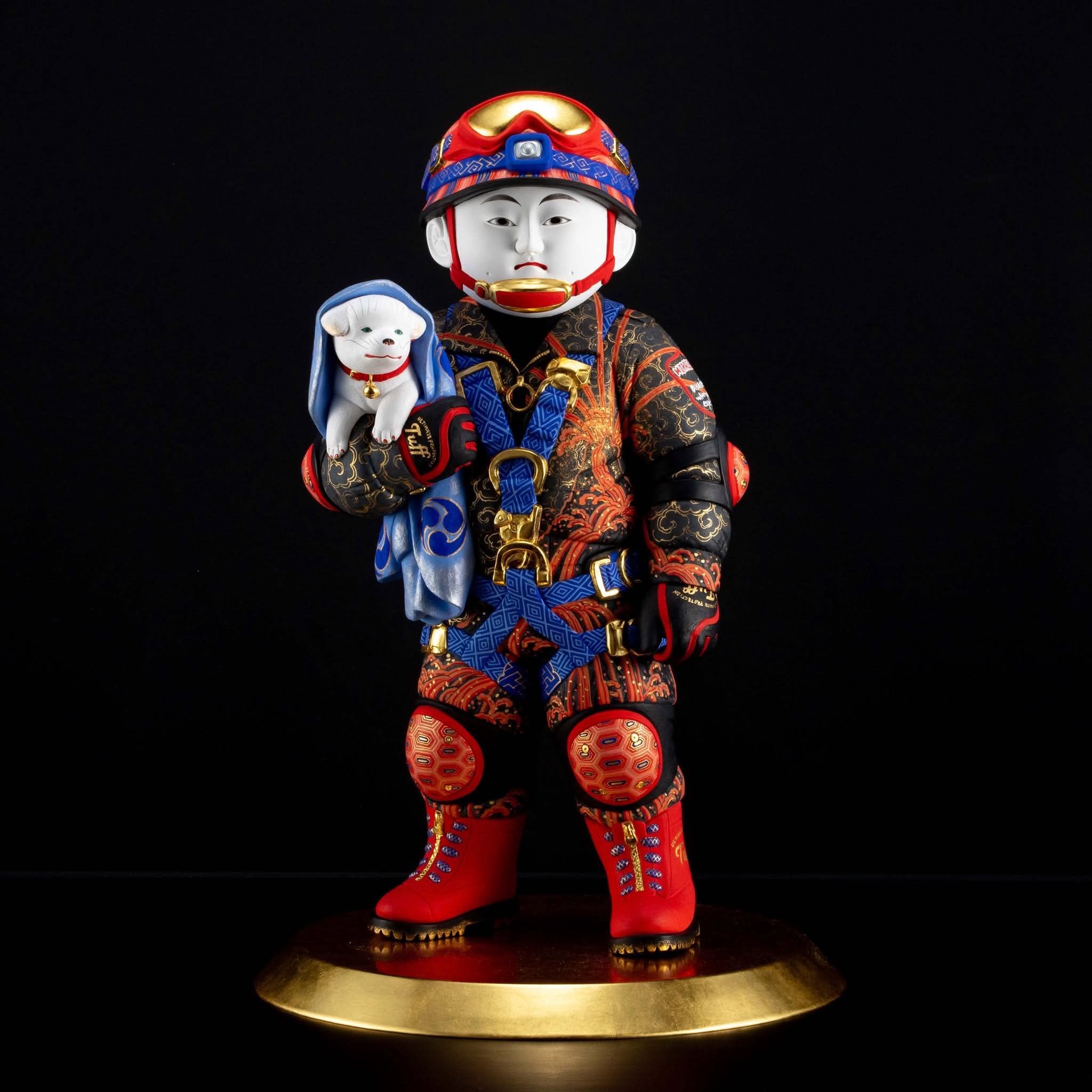
Hiromine Nakamura
GREAT MISSION -Flood Hazard-
2025
Painted Ceramic Sculpture
Sculpture
H55 × W30 × D20 cm
Artist Profile
Doll artist born in 1986.
After completing his master’s degree in sculpture at Tokyo
University of the Arts in 2011, he apprenticed under his father, Shinkyo Nakamura.
As the fourth-generation head of Nakamura Ningyo, a Hakata doll workshop
founded in 1917, he protects this legacy while creating lighthearted works based
on a sci-fi-lik e hypothesis: “Wha t if a skilled dollmak er from the Edo period wer e
to time travel into the present day?” Hiromine regards dolls as the “smallest unit of
religion,” believing tha t they embody personal pr ayers. His signa ture Athlete
Series was born from overlapping the strength of the traditional Momotaro doll,
which symbolizes hopes for a child’s growth, with the image of contemporary
baseball players. His delicate yet daring technique transforms people’s fundamental
prayers into contemporary forms rooted in tradition’a kind of acrobatic artistry
only possible for a true game-changer. Hiromine’s hands may be giving shape to
prayers for the next generation, encouraging an embrace of transformation. Perhaps,
in time, the next generation’s Momotaro may transform into something
beyond today’s athletes.
HANDS OFFLINE
Detail- SECTION :
- AFAF Special Booth
- BOOTH :
- A05
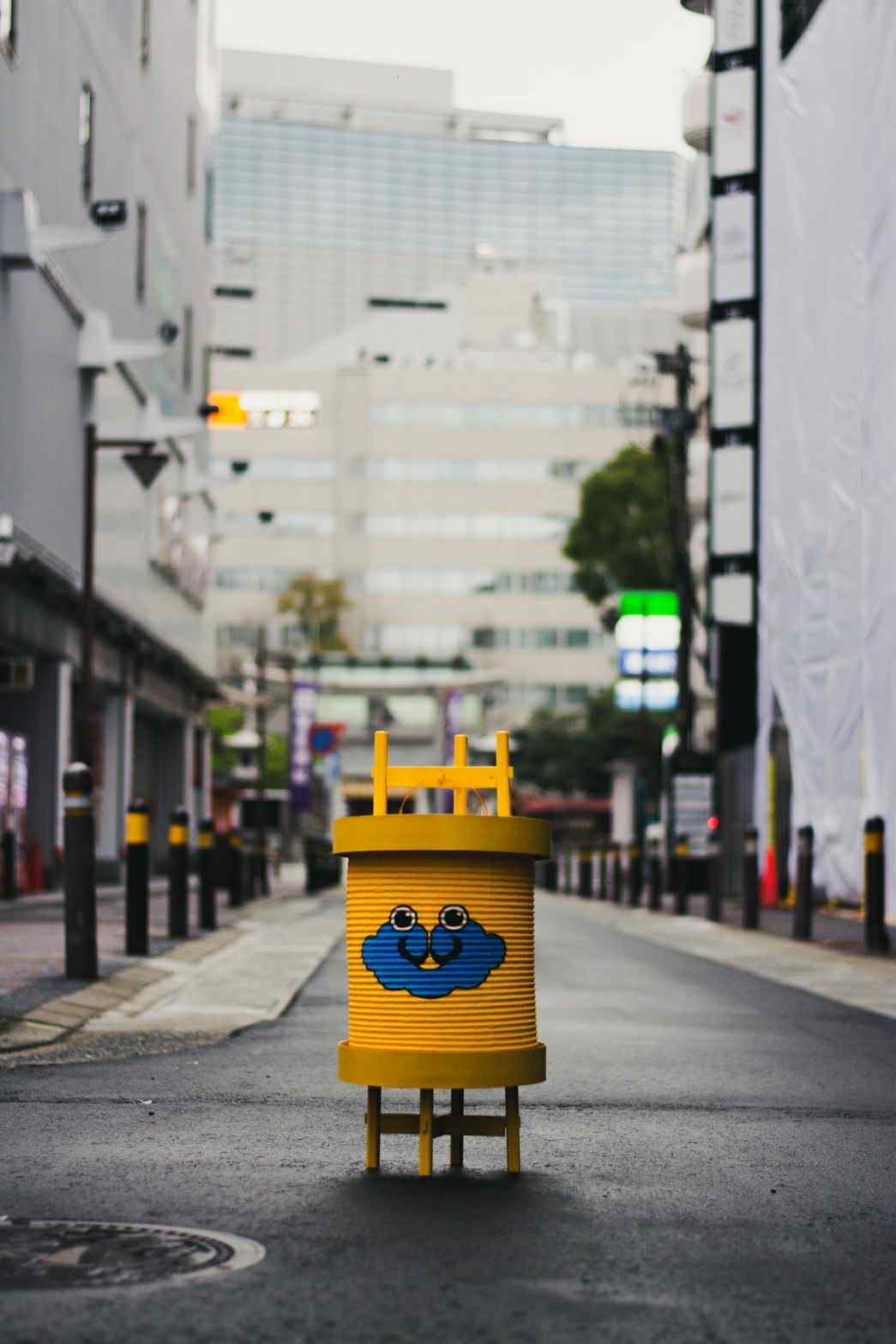
crafcult
MONMON - kuumon -
2024
Japanese washi paper, Wood, Acrylic, Iron wire
Mixed Media
H77 × W37 × D37 cm
Artist Profile
Creative unit founded in 2021. crafcult, meaning “worship of craft,” reinterpret traditional Japanese lanterns in a contemporary context, incorporating motifs such as
yokai (spirits), kamon (family crests), and shunga (erotic prints). Its representative,
Hiroki Ito, is the eighth-generation head of the lantern maker Ito Gonjiro Shoten in
Fukuoka.
The single-strip spir al construction of Yame lanterns, made with long
bamboo splints, boasts the largest production volume of memorial lanterns in
Japan. More than just cultural DNA, Ito has literally inherited the lantern-making
DNA passed down for 210 years. Combined with his original creative direction,
this craftsmanship continues to illuminate an unprecedented lantern culture both
in Japan and abroad. Lanterns have traditionally been used as lighting, festival
decorations, signboards, or Buddhist ritual implements. The MONMON series exhibited
in H ANDS OFFLINE, however, was inspired by Ito’s thought that “family
crests began to look lik e faces.” In these work s, crests muta te into pop-lik e mon –
sters, representing enigmatic worlds. The hands of crafcult seem to invite us into a
world contrasting with the overly bright modern world, perhaps connecting to a
realm beyond the post-Internet online world.
HANDS OFFLINE
Detail- SECTION :
- AFAF Special Booth
- BOOTH :
- A05
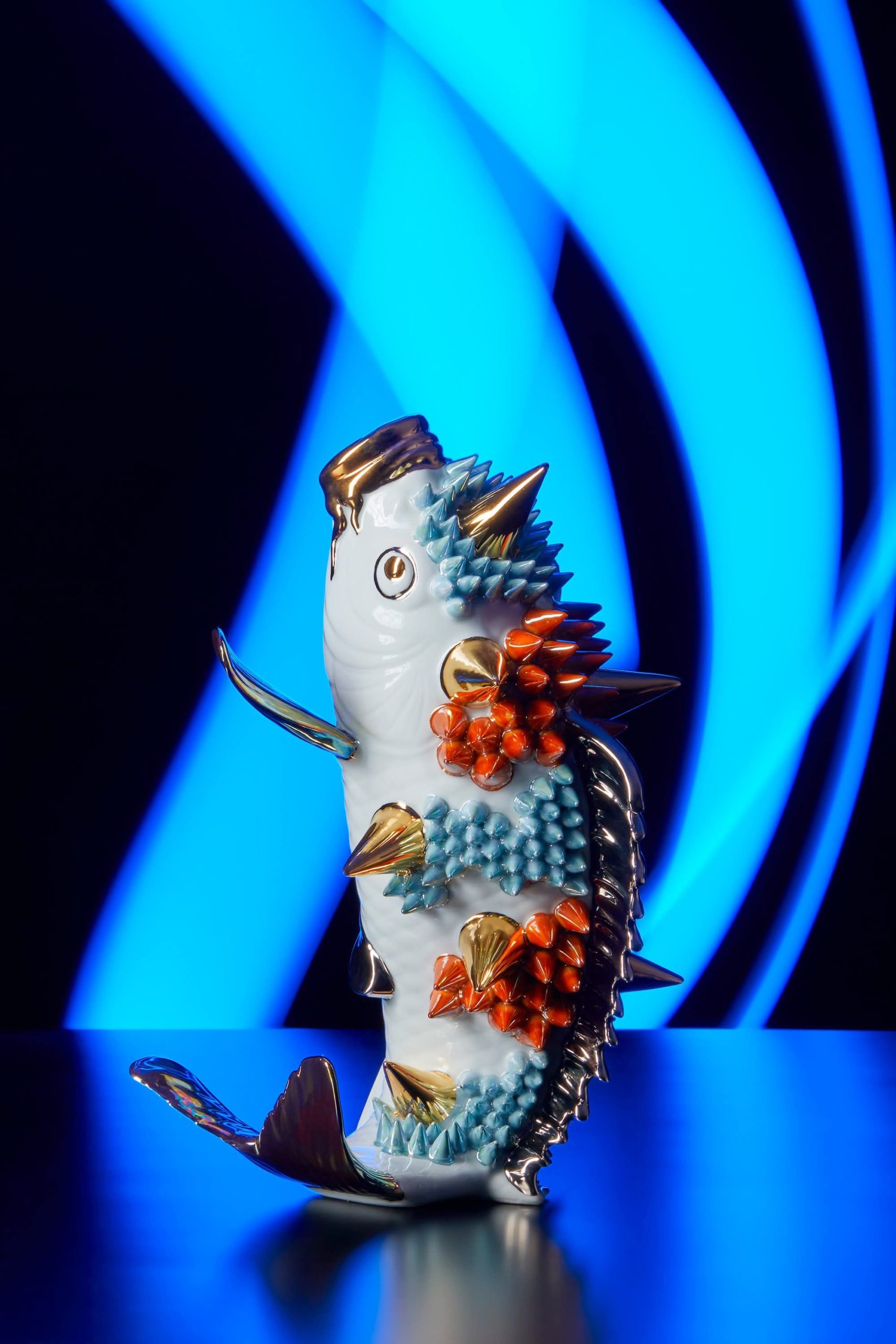
Takahiro Koga
NEO NOBORIGOI
2025
Ceramic Clay (Amakusa clay)
Sculpture
H30 × W20 × D16 cm
Artist Profile
Ceramic ar tist born in 1987. Known for his “Anti- Wabi-Sabi” work s, in which he
combines traditional Japanese craft objects such as maneki-neko (beckoning cats)
and daruma dolls with punk-style studs. In the late 1970s, Britain’s young people’s
despair and pessimism about the futur e took the form of “No F uture.” By contr ast,
Koga’s r eversal of Sen no Rik yū’s aesthetics-his Anti-Wabi-Sabi-is dazzling.
Indeed, compared to the listless resignation in Radiohead’s No Surprises (1997),
with its key shifts and suspended fourth chords, the Sex Pistols’ God Save the
Queen (1977), built on brisk major chords, radiates a frustrated energy pushing to
break through the status quo. Punk, paradoxically highlighting the future precisely
by shouting “No F uture,” resembles Rikyu, who fa scinated Koga by using black tea
bowls to “er ase the pr esence of the bla ck t ea bow l, thereby ac centuating t he t ea”
(B-OWND).
Then wha t is it tha t the ma terial e xaggeration of Anti-Wabi-Sabi can – cels out?
Or perhaps Koga, while engaging with contemporary culture, is reaching
toward an entir ely different offline world.
HANDS OFFLINE
Detail- SECTION :
- AFAF Special Booth
- BOOTH :
- A05